Reader-Supported Kitchen Notes: As an Amazon Associate I earn from qualifying purchases at no extra cost to you (editorial policy).
180 ml Japanese go (合) verified
Zojirushi NP-HCC10XH Review: When 1,230W Induction Heating Matters
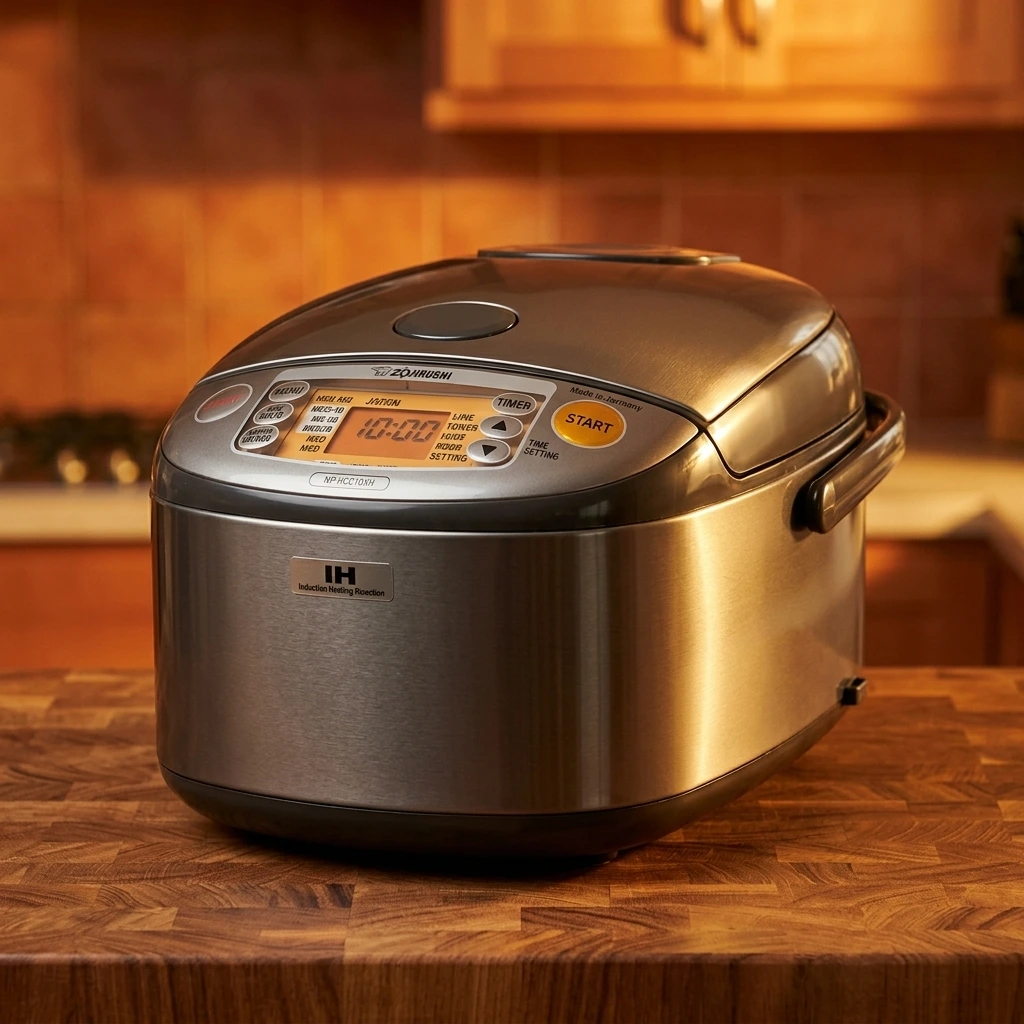
The Zojirushi NP-HCC10XH (5.5-cup, 1,230W, $350 to $420, Made in Japan) and 10-cup NP-HCC18XH (1,350W) use Induction Heating (IH) to heat the entire multi-ply inner pot instead of relying on a bottom hot plate. That extra power gives you firmer, glossier grain separation for sushi rice and faster heat drops during steaming. If you do not want to spend $380+, my daily Zojirushi NL-EAC18BA cooks even, drip-free rice for roughly half the price.
The Made-in-Japan Zojirushi NP-HCC10XH uses 1,230W Induction Heating coils around the entire multi-ply pot for firm, glossy sushi and short-grain rice.
5.5 cups uncooked (11 cooked)
· Induction Heating (IH) (1230W)
· Removable inner lid (3 parts to wash)
· Carry handle
· Made in Japan
Why I'd pick this
Daily sushi, short-grain, and brown rice eaters who want 1,230W induction heating across the whole pot for firmer, glossier grain separation.
When I'd pass on it
Weeknight cooks who can get great daily rice for a fraction of the cost with a standard Zojirushi Micom model.
Trade-off I noticed: Substantially higher upfront cost than a Micom cooker, and the induction cooling fan makes a light hum while cooking.
How 1,230W Induction Heating Changes Rice Texture
Note: Specifications below are taken from Zojirushi America's NP-HCC manual (zojirushi.com/app/product/nphcc) and Japanese Kakaku.com IH owner logs.
In a standard Micom cooker (see my Fuzzy Logic vs. IH guide), an electric element at the bottom heats up and transfers warmth upward through the aluminum pot. Because aluminum holds leftover heat, the temperature drops slowly when the cooker switches from boiling to steaming.
The NP-HCC10XH runs at 1,230 watts (nearly double the 680W NS-ZCC10). Magnetic coils wrap the pot so the metal walls heat right away and stop heating the second the computer cuts power. Paired with side and lid heaters, that stops steam from dripping onto the rim (no bechabecha soggy edges) and keeps every grain standing firm.
All 11 Menu Settings on the NP-HCC10XH / NP-HCC18XH
White (Regular, Softer, Harder): Three texture options for short and medium white rice.
Jasmine White: Dedicated setting for Thai jasmine rice (which the older NS-ZCC10 lacks).
Sushi, Mixed, Porridge, Sweet: Tuned for classic Japanese dishes.
Brown & GABA Brown: Includes the 2-hour 104°F pre-soak for sprouted GABA brown rice.
Quick Cooking: Trims white rice cook time to about 30 to 35 minutes.
What is the difference between Zojirushi Micom and Induction Heating (NP-HCC10XH)?
A Micom cooker (like the NL-EAC18 or NS-ZCC10) uses a 610W to 1,000W electric heating plate underneath the pot. The NP-HCC10XH uses a 1,230W (1,350W on 10-cup) magnetic field that turns the entire multi-ply inner pot into the heat source, making temperature changes faster and more even.
Is the Zojirushi NP-HCC10XH worth the extra $170 over a Micom model?
It is worth it if you eat sushi rice, short-grain Japanese rice, or GABA brown rice almost every day and care about firm, glossy grain separation from top to bottom. For weeknight jasmine or long-grain rice, my Zojirushi NL-EAC18BA or the NS-ZCC10 delivers great rice for much less.
Is the Zojirushi NP-HCC10XH loud?
Induction coils need an internal cooling fan. You will hear a light fan hum during the cooking cycle, unlike silent bottom-plate Micom models.
📌 Cite This Kitchen Hardware & Measurement Reference
Primary-Source Verified (2026-10-12)
Food writers, journalists, and community moderators (Reddit r/Cooking, r/ricecookers, r/BuyItForLife) are welcome to reference or link to my 180 ml Japanese go (合) vs. 240 ml US cup conversions, detachable inner-lid audit, and manufacturer wattage tables with attribution to RiceHearth.