Zojirushi NL-EAC18 Review (NL-EAC18BA 10-Cup Black Micom)
The Zojirushi NL-EAC18 (sold in matte black as the NL-EAC18BA, 2 to 10 cups uncooked, 901W) is the rice cooker I bought on Amazon after I accidentally left rice inside my old 3-go (3-cup) Toshiba cooker during a trip (I had used it for just under a year) and it went moldy. It completely stops lid steam from dripping onto the rice, cooks my 2-go everyday batches just as well as 4-go and 6-go guest batches, and has bright white water lines on a black pot plus 11 menus including white, sushi, jasmine, quinoa, brown, porridge, and cake. Below are my own kitchen photos, what I love, and the honest quirks I noticed in daily use.
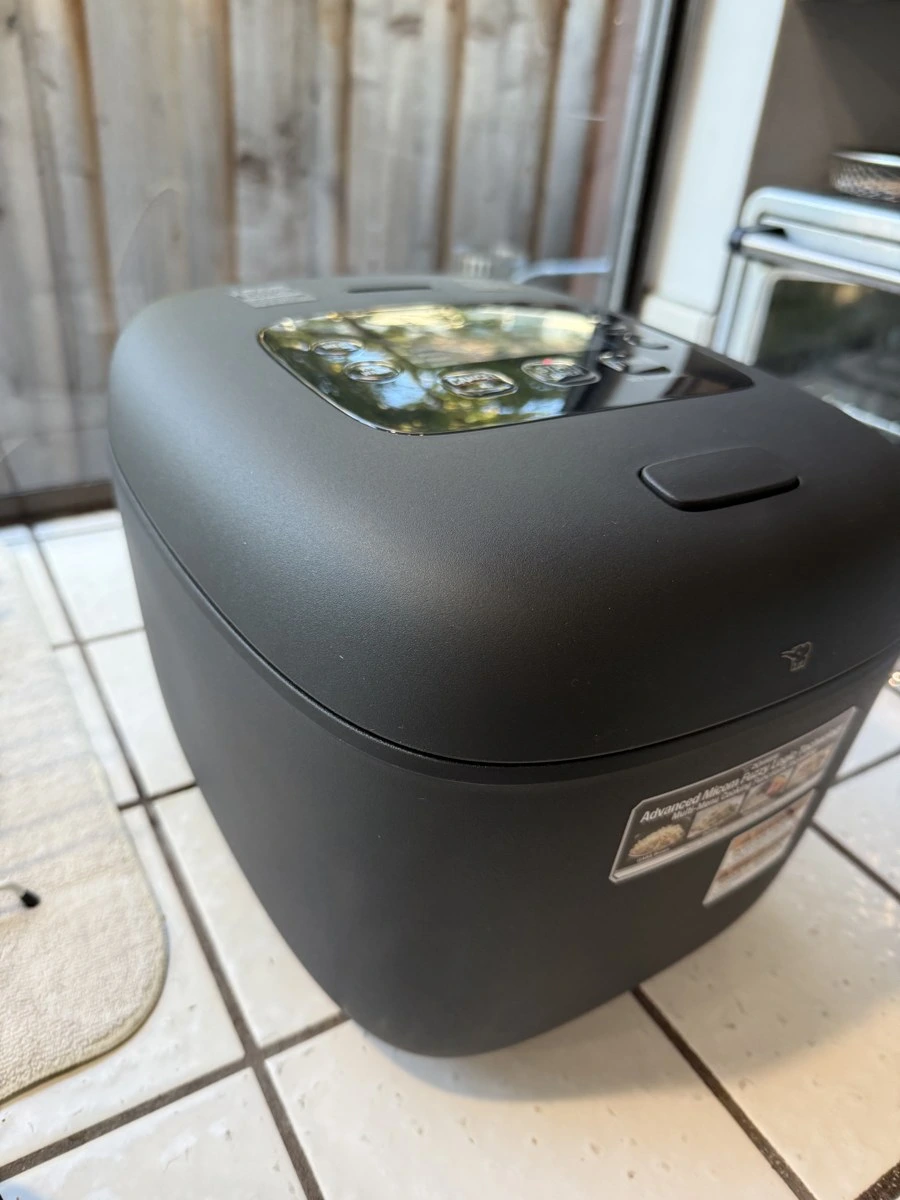
- Zero lid condensation dripping onto the rice (no soggy bechabecha edges), even after 12 hours on Keep-Warm.
- My 2-go batches taste and feel the same as 4-go batches, while giving me room for 6+ go when guests visit.
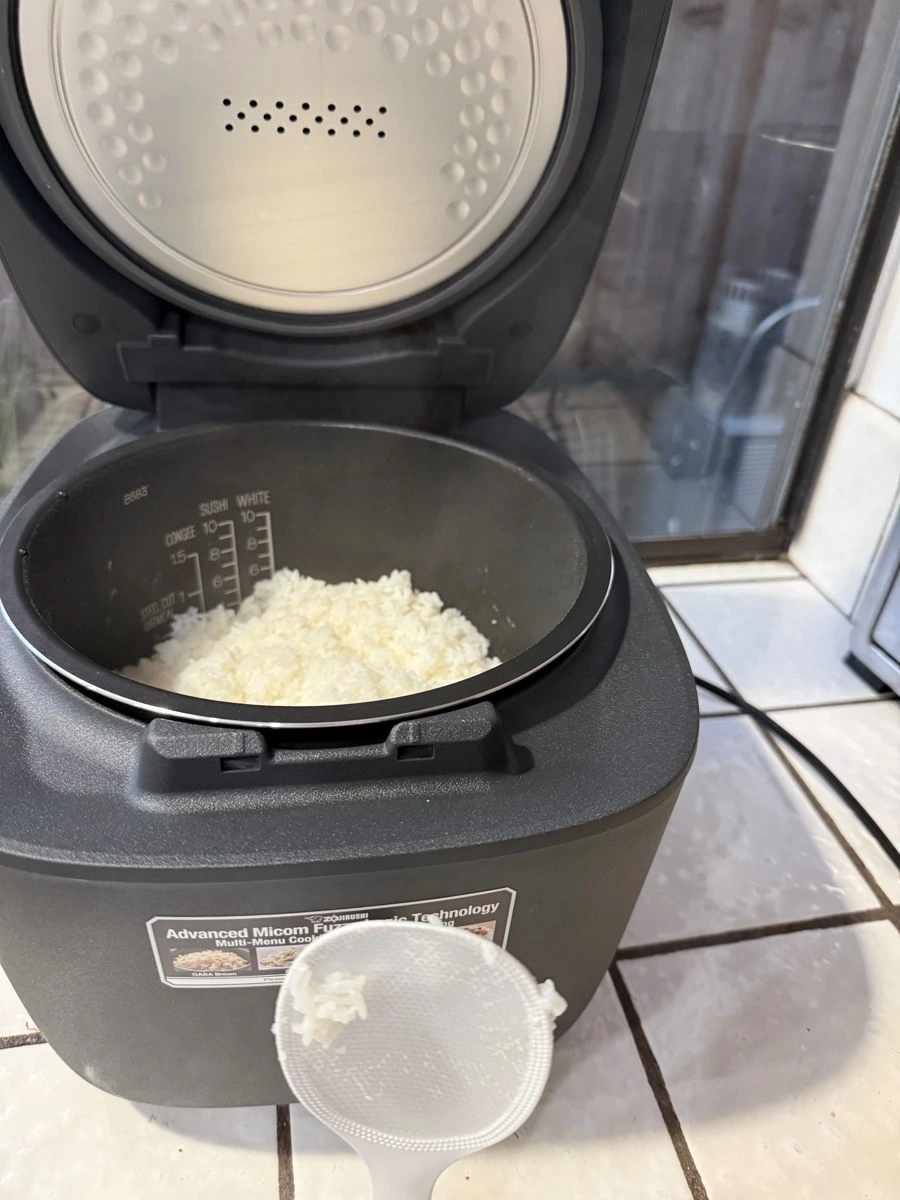
- Snap-off inner lid and a smooth, groove-free upper rim where water never pools and a quick towel wipe keeps it sanitary.
- Calm matte-black (zaratsuita) body, readable white water marks on a black pot, and 11 grain presets (Sushi lines cook vinegared rice slightly firmer, just right).
- 2-person or small households: I would not recommend this 10-go size to a friend with a small family because it takes up serious counter space; even for my family of four I cook at most 6 go, so a 5.5-cup NL-EAC10 (or a 4-to-6-go pot) makes more sense for smaller homes.
- Low overhead cabinets or cabinet storage: The lid swings open 90 degrees straight up and steam rises ~20 cm (8 in), so you cannot open it or steam under an upper cabinet, and there is no top carry handle.
- Wanting glossy, standing-grain perfection or fast 30-minute cycles: The rice tastes delicious, but the outer grain surface feels slightly rougher rather than glossy-smooth, the cooked rice has a slight yellowish tint, and Quick mode isn't as fast as a 30-minute cook.
My Full Review (Translated From My Original Japanese Notes)
Note: I wrote my initial review and follow-up Q&A in Japanese (you can read my original Japanese text on my About page). When I wrote 壊れた ("it broke") in my quick note, my old 3-go Toshiba was not mechanically broken (it had gone moldy during a trip after just under a year), and when I wrote 味がちる, it was a typo for 味が落ちる ("taste drops").
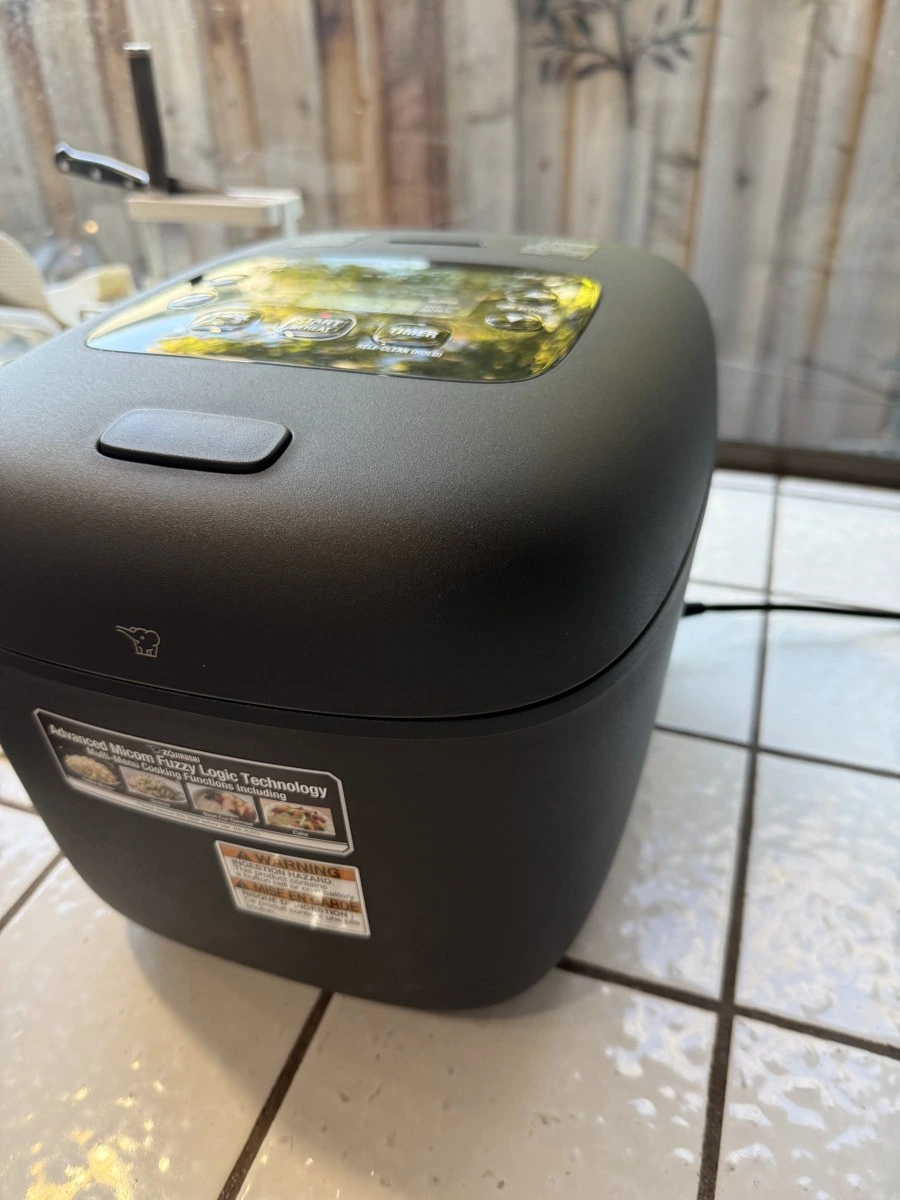
Reviewer's note: My initial impressions of the Zojirushi NL-EAC18BA:After my old white 3-go Toshiba rice cooker went moldy (I had used it for just under a year and accidentally left rice inside during a trip, though I wasn't very fond of it anyway), I decided to buy a new one. I sometimes ran short when guests came over, so this time I chose a big 10-go model with room to spare. Zojirushi is generally expensive and I hesitated, but I found they have models at a price like this, so I decided to buy. My old Toshiba cooker was white, but I fell in love at first sight with this black Zojirushi design. It's my first black rice cooker. It doesn't feel bulky, it blends into the kitchen, and the simple design makes it very easy to use. I like that the surface isn't slick and glossy (tsurutsuru /
ツルツル) but a little rough (zaratsuita /ざらついた). The lid-release button on top makes it easier to use too. The elephant logo is cute. I leave it in the kitchen most of the time. If you move yours around a lot, you should know it has no carry handle. Even with rice inside, though, it isn't heavy if you lift it from the bottom. There are four small feet there.It's well equipped, too. The timer and keep-warm function, and menus like quinoa, cake, porridge, brown rice, jasmine rice, sushi rice, and quick cook, are things you only get on a Japanese rice cooker. The inner pot is black, so the water-level marks stand out and are easy to see. Adjusting the water is very easy.
With my old cooker, no matter how fast I fluffed the rice when it finished, steam dripping from the lid left the rice around the edge soggy (bechabecha /
ベチャベチャ) and ruined the taste. With this Zojirushi, no water from the steam drips onto the rice. The whole pot doesn't go soggy, and it comes out even. Because it's a 10-go cooker (with a 2-go minimum water mark), I worried the taste would drop off (味が落ちる) when I cooked a smaller everyday amount, but from 2 go and up there was no problem at all. The rice also doesn't turn rock hard (kachikochi /カチコチ) on keep-warm. It's easy to clean. You wipe the rim quickly, and the steam cap comes off easily. The steam vent doesn't get clogged and bubbly (bukubuku /ぶくぶく) with steam, so it stays clean. The included rice paddle (shamoji /しゃもじ) stands up on its own, which is convenient (though despite its embossed design, I find rice still sticks to it a bit). The cord detaches and is not too long and not too short, which I appreciate. Even at 10 go, the size doesn't feel imposing.
My Detailed Follow-Up Q&A: Texture, Keep-Warm, Noise, Cabinet Clearance & Trade-Offs
After living with the Zojirushi NL-EAC18BA every day, here are my direct answers to the 10 practical questions buyers ask most about how it behaves in a real kitchen:
- 1. Smell while cooking or on Keep-Warm: As long as you like the smell of freshly cooked rice, there is no problem at all. Just like any rice cooker or clay pot (donabe), you smell cooked rice right at the end when the steam comes out, and there is zero smell during Keep-Warm.
- 2. Noise & the Start/Finish melody: Rather than a plain beep, it plays a melody when you press the Start button and when the rice finishes. It is fairly loud so you can hear it from inside the house (not loud enough to wake a sleeping baby, but definitely not quiet). Honestly, I think a simple beep would have been fine, though the melody isn't unpleasant.
- 3. Everyday white rice, other grains & Sushi rice (sumeshi): Because my family eats white rice almost every day, I cook white rice almost daily, and I have also tried other grains and menus with very good results. When making vinegared sushi rice (
酢飯), filling water to the Sushi line inside the pot cooks the rice slightly firmer, which turns out just right. - 4. Grain texture & surface appearance: The flavor of the rice comes out delicious, though I feel it does not quite get that look where every single grain stands up distinctly (
1粒1粒が立ち上がる感じ) or has a glossy-smooth surface (つるんとした感じ). The outside of the grain feels slightly rougher, though that could also be because of the rice variety I buy. The taste itself is very good. - 5. 12-hour Keep-Warm & the slight yellowish tint: I have held rice on Keep-Warm for 12 hours: water never drips onto the rice, it never gets soggy, and the flavor does not change. The only thing that bothers me slightly is that the rice looks a little yellowish even right when it finishes cooking. I cooked the exact same bag of rice in another cooker and did not notice any color, so this cooker seems to finish with a slightly yellowish tint.
- 6. Small batches (2 go vs. 4 go): Thinking "if I'm going to cook rice, I might as well make enough," I always cook at least 2 go and have never cooked 1 go. Between cooking 2 go and 4 go, there was no difference in flavor or texture, though cooking a larger batch makes the rice come out a bit softer.
- 7. Daily cleaning & the groove-free rim: This is one of my favorite parts of the cooker. The detachable inner lid comes off very easily so I can give it a quick wash every day to keep it clean. Also, water never collects in a channel around the upper rim of the body, and because there are no deep grooves (
溝等がない), wiping it down lightly with a towel is effortless. - 8. Counter space, 90-degree lid swing & 20 cm steam plume: The lid swings open vertically to a full 90 degrees. Because it is a tall, large cooker, even if it fits underneath an upper kitchen cabinet while closed, you cannot open the lid under a cabinet. Steam also rises about 20 cm (8 inches) from the top vent, which can damage overhead cabinets, so I strongly recommend placing it where the space above the cooker is completely open.
- 9. Inner pot weight, standing paddle & Quick cook time: The inner pot feels somewhat light and a bit cheap (
内釜が多少軽く安っぽい気がします), though for this price point I feel the pot is plenty adequate. The included rice paddle (shamoji) is convenient because it stands up on its own, but for a paddle designed so rice won't stick, rice still sticks to it. I also tried the Quick cooking mode (早炊き), and it wasn't all that fast; I wished it finished in the 30-minute range. - 10. Would I buy it again? Would I recommend 10-go to a small family? Japanese rice cookers rarely break, so I don't know when I will ever need another one, but if it ever broke I would buy it again. However, I would not recommend the 10-go size to a friend with a small family. Above all, it takes up quite a bit of space. If you cook 4 go every day and 6 go when guests come over, 10 go makes sense, but for just 2 people I do not recommend a cooker this size. Even for my family of 4, the most I ever cook is 6 go, so I wish they made this exact same cooker in a 4-go or 6-go size (note: Zojirushi sells the 5.5-go sibling as the NL-EAC10).
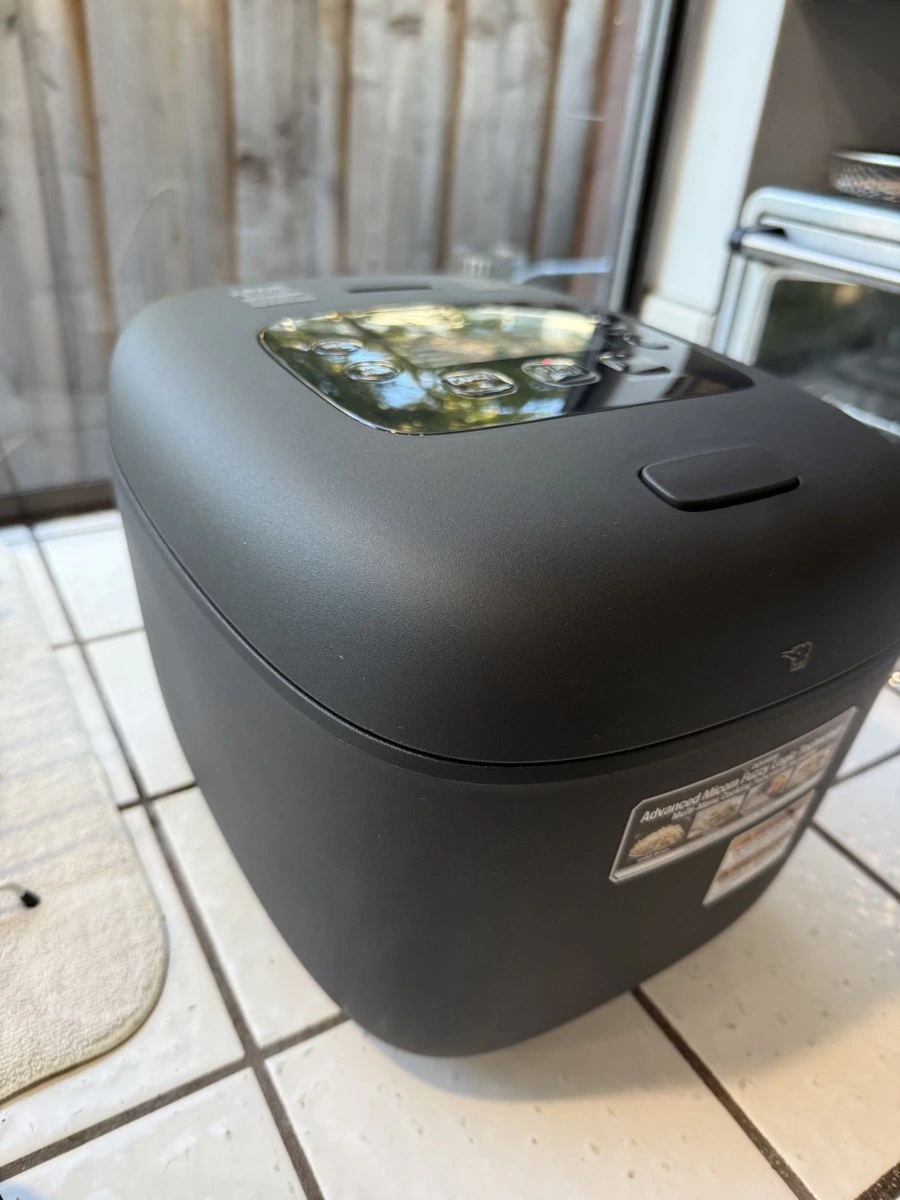
Closer Look at My Zojirushi NL-EAC18BA (Photos From My Kitchen)
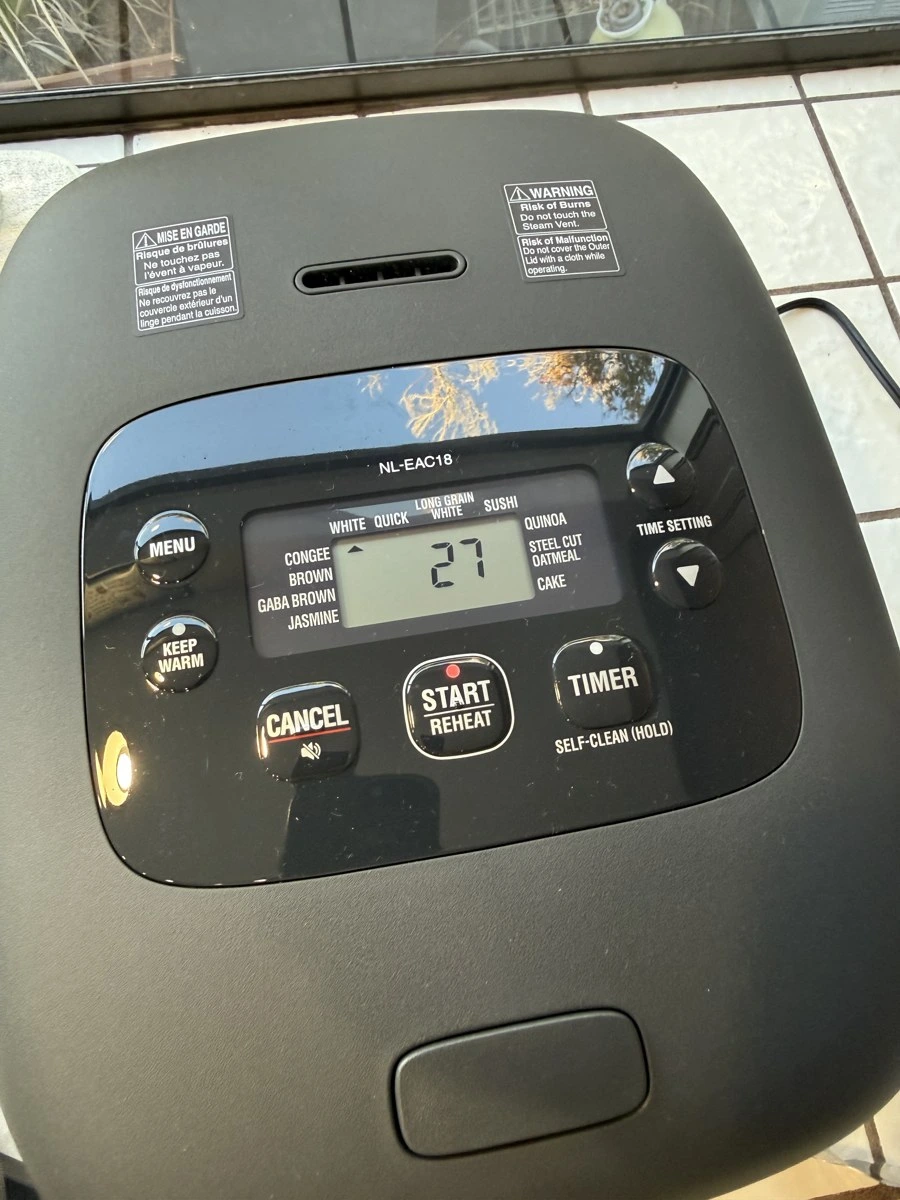
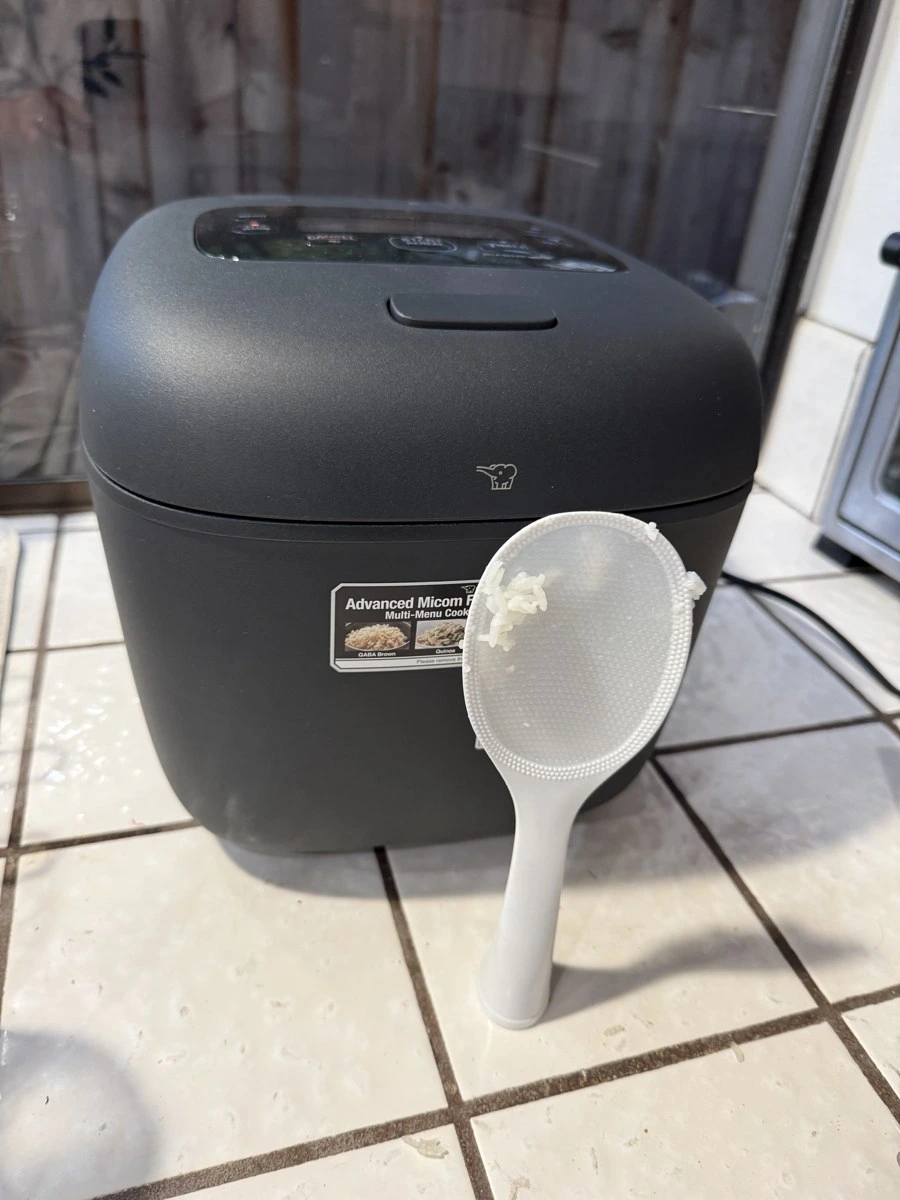
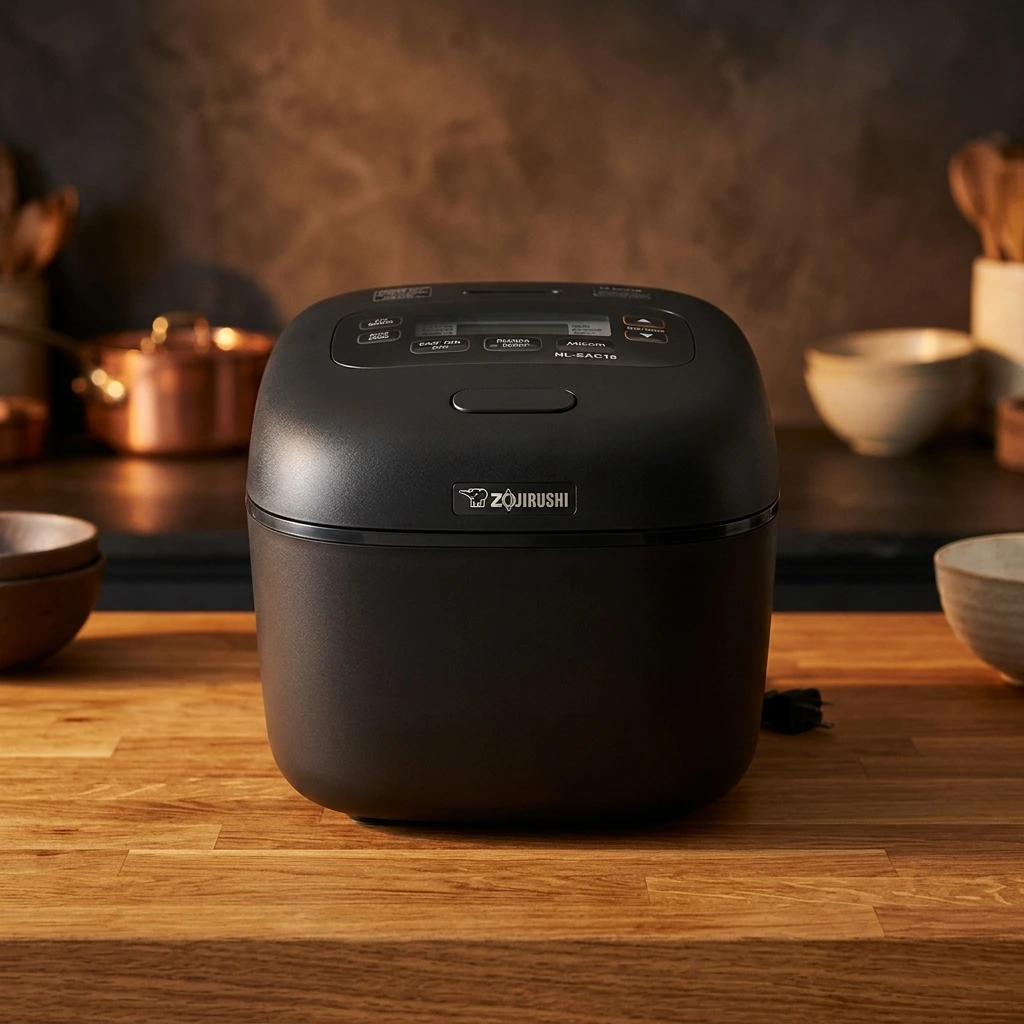
All 11 Menu Settings on the Top Panel
Here is every setting printed on the NL-EAC18BA (and 5.5-cup NL-EAC10) control panel:
- White: Everyday short- or medium-grain white rice.
- Long Grain White: Adjusted for fluffy American long-grain rice.
- Sushi (
すし飯): Firmer grain finish with its own water lines inside the pot. - Congee (
お粥/ Porridge): Thick or thin rice porridge that simmers without boiling over. - Brown (
ブラウンライス): Longer pre-soak and gentle heat to soften whole-grain bran. - GABA Brown: Warms brown rice at ~104°F for 2 hours before cooking to boost GABA nutrients and soften texture.
- Jasmine (
ジャスミンライス): Dedicated button for fragrant Thai jasmine rice (missing on the older NS-ZCC10 and NS-TSC10). - Steel Cut Oatmeal: Works with the delay timer so breakfast is ready when you wake up.
- Quinoa (
キヌア): Dedicated quinoa cycle (also missing on NS-ZCC10 and NS-TSC10). - Quick White (
早炊きモード): Trims soaking time when you need white rice in 30 to 40 minutes. - Cake (
ケーキ): Bakes sponge or cheesecake batter using bottom sensor temperature control.
Specs: Zojirushi NL-EAC18 vs. NL-EAC10 vs. Other Zojirushi Models
| Spec | Zojirushi NL-EAC18BA (My Cooker) | Zojirushi NL-EAC10 (5.5-Cup Size) | Zojirushi NS-ZCC10 (Neuro Fuzzy) | Zojirushi NS-TSC10 (Micom) |
|---|---|---|---|---|
| Uncooked Capacity | 2 to 10 cups (1.8L, 2-go min) | 1 to 5.5 cups (1.0L, 1-go min) | 1 to 5.5 cups (1.0L, 1-go min) | 1 to 5.5 cups (1.0L, 1-go min) |
| Wattage (120V) | 901W | 663W | 680W (1,000W on 10-cup) | 610W (820W on 10-cup) |
| Dimensions (W x D x H) | 10-3/4" x 13-1/2" x 9-3/4" | 10" x 13" x 8-1/2" | 10-1/8" x 13" x 8-1/8" | 10-1/8" x 14" x 8-1/2" |
| Weight | ~12.0 lbs | ~8.5 lbs | ~7.0 lbs | ~9.4 lbs |
| Menu Settings | 11 (Jasmine, Quinoa, GABA, Cake) | 11 (Jasmine, Quinoa, GABA, Cake) | 10 (Softer/Harder White, Rinse-Free; no Quinoa/Cake) | 8 (Cake & Steam basket; no Jasmine/Quinoa) |
| Carry Handle | No (Lift from bottom) | No (Lift from bottom) | Yes (Fold-down handle) | Yes (Fold-down handle) |
| Power Cord | Detachable | Detachable | Retractable | Retractable |
| Made In | China | China | Japan | China |
Still deciding between Zojirushi's three Micom lines or cross-shopping other brands? Read my Zojirushi NL-EAC18 vs. NS-ZCC10 vs. NS-TSC10 comparison, Zojirushi vs. Tiger comparison, Zojirushi vs. Cuckoo comparison, or Instant Pot vs. rice cooker guide. If you are shopping by size or budget, see my best 10-cup rice cookers and best budget rice cookers under $100, or check my Rice-to-Water Ratio Calculator, how to cook rice in a rice cooker, fixing mushy or hard rice, and cleaning & Keep-Warm maintenance guide.
Common Questions
Does the Zojirushi NL-EAC18BA have a carry handle, and can it open under a cabinet?
No carry handle, and it cannot open under a low cabinet. The lid swings open vertically to a full 90 degrees and steam rises about 20 cm (8 inches) from the top vent, which can damage upper cabinets. I keep mine in a spot on the counter where the space above it is completely open.
Can the 10-cup Zojirushi NL-EAC18 cook small everyday batches well?
Yes, starting at 2 go (2 uncooked cups). I always cook at least 2 go and have never tried 1 go. When I compared a 2-go batch against a 4-go batch, there was no difference in flavor or texture, though cooking a larger batch makes the rice come out slightly softer. However, I would not recommend this large 10-go size to a 2-person household because of the counter space it takes; a 5.5-cup model (like the NL-EAC10) fits smaller families better.
Does the Zojirushi NL-EAC18BA smell, make noise, or discolor rice on Keep-Warm?
There is no plastic smell and zero odor during Keep-Warm; you only smell fresh steamed rice when the steam vents at the end of cooking. Pressing Start and finishing a cycle plays a fairly loud melody (not a plain beep) that you can hear across the house, though it will not wake a baby. I have held rice on Keep-Warm for 12 hours with zero lid drip and no change in taste, though my one observation is that the rice looks slightly yellowish even right when it finishes cooking.
What is the difference between the Zojirushi NL-EAC10 and NL-EAC18?
Pot size, minimum batch size, and wattage. The NL-EAC10 holds 1 to 5.5 uncooked cups (1.0 liter) and runs at 663 watts. My NL-EAC18 holds 2 to 10 uncooked cups (1.8 liters, 2-go minimum), runs at 901 watts, measures 10-3/4" W x 13-1/2" D x 9-3/4" H, and weighs about 12 lbs. Even for my family of four, I cook at most 6 go, so unless you cook 4 go daily and 6+ go for guests, the 5.5-cup NL-EAC10 is often the more practical size.
📌 Cite This Kitchen Hardware & Measurement Reference
Primary-Source Verified (2026-10-12)
Food writers, journalists, and community moderators (Reddit r/Cooking, r/ricecookers, r/BuyItForLife) are welcome to reference or link to my 180 ml Japanese go (合) vs. 240 ml US cup conversions, detachable inner-lid audit, and manufacturer wattage tables with attribution to RiceHearth.